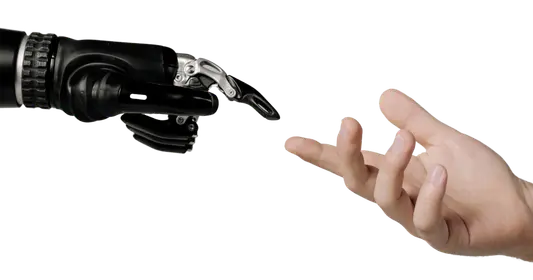
What if your dead vape could get a second life?
Re-Charge is exploring how to recover the usable batteries inside dead vapes and give them a second life — instead of landfill.
🔋 Your device is at — right now. Every "dead" vape in a bin today still holds real charge — that's the whole point.
Power. Reclaimed.
Disposable vapes don't disappear when you're finished with them.
Every disposable vape is a rechargeable lithium battery locked inside a product designed to be binned after one use. Nobody who vapes is to blame — the design is the problem, and the people returning their devices are the solution.
Lithium Batteries
Disposable vapes contain rechargeable lithium-ion batteries.
Electronic Waste
They're built for a single use — so working technology becomes e-waste, with no easy way to hand it back. Until now.
A Second Life
Re-Charge wants to explore recovering suitable components for new applications.
The scale of it — starting here at home
South African adults vape1 — in a market growing ~15% a year, which means ever more rechargeable cells in circulation2
of South Africa's ~360 000 tonnes of yearly e-waste is formally recycled — the rest heads for landfill3
of disposable vapes sold in South Africa are estimated to end up in landfill — batteries and all4
The kicker: that "dead" battery is a rechargeable cell built for hundreds of charge cycles5 — binned only because the product around it is finished. (The UK's yearly binned vapes hold enough lithium and copper for ~5 000 EVs6.) Nobody is counting South Africa's number — that's part of what we want to change.
📚 Sources
- Global State of Tobacco Harm Reduction (2024) — ~962 700 current vapers in South Africa
- P&S Market Research (2024) — South African e-cigarette market projected to grow ~15% annually to 2030
- eWASA / Global E-waste Monitor (2024) — South Africa generates ~360 000 tonnes of e-waste yearly; ~12% formally recycled
- Desco Electronic Recyclers (SA) — ~95% of single-use vapes in South Africa are estimated to end up in landfill
- University of Oxford / UCL (2023) — single-use vape cells can endure hundreds of recharge cycles
- Material Focus (UK, 2023) — lithium & copper in the UK's yearly binned vapes ≈ 5 000 EV batteries
From disposable to reusable.
Collect
Old disposable vapes are collected through dedicated Re-Charge collection points.
Recover
The batteries and useful components are separated from the rest of the device.
Test
Recovered batteries are inspected and tested to determine whether they are suitable for safe reuse.
Re-Charge
Suitable cells could be rebuilt into products like portable power banks — housed in enclosures 3D-printed from recycled plastic bottles, so the whole product is made from waste.
Could your old vape become your next power bank?
Re-Charge One
A compact portable power bank designed to be built almost entirely from waste — nothing about it starts life as new material.
-
The cells Lithium-ion batteries reclaimed from disposable vapes, tested and matched for safe reuse.
-
The enclosure 3D-printed from recycled plastic bottles — waste plastic turned into a tough, repairable shell.
Close the loop. Get rewarded.
Returning your dead vapes shouldn't just feel good — it should pay off. Drop them in a Re-Charge collection bin, scan and earn points towards the very products built from what you returned.
How the points could work
| Return a disposable vape | +50 RP |
| First-ever drop bonus | +100 RP |
| R50 off a Re-Charge One | 500 RP |
| Giveaway entry | 1 000 RP |
| Re-Charge merch | 2 000 RP |
Point values are illustrative; points earned during the concept phase would be honoured as founder credit if Re-Charge launches. Points would be capped per person per day, redeemable up to a capped share of any order, and would expire after 12 months — and if you've found a stash of hundreds, we'd love them via a separate bulk drop-off channel, not the QR.
📍 Put a Re-Charge bin at your venue
Vape shop, bar, nightclub, festival, campus, office park — anywhere vapes get used is somewhere they get thrown away. Your venue becomes a collection point.
- Compact lockable bin supplied free (~30 L, fire-safe design, narrow anti-access slot) — we'd handle collection and recycling logistics
- Deposits validated with one staff tap — no admin, no storage headaches beyond the bin
- Foot traffic, event activations and co-branding as a founding collection point
Thanks — you're on the founding-partner list. We'll be in touch as the concept develops. 🏪⚡
Questions venues ask us
Is a bin full of lithium batteries safe on my premises?
The bin is designed around exactly that risk: lockable lid, a narrow slot that keeps hands (and anything burning) out, a sloped internal insert, and a fire-safe reduced-oxygen design. Bins would be emptied on a schedule so they never sit full. And to be direct about liability: no bin would ship before we've taken out public-liability cover for the bins and their contents — that policy doesn't exist yet because the programme doesn't, but it's a launch requirement, not an afterthought. Hosting a bin would never shift battery risk onto your business.
Who empties it, and how often?
We would — scheduled collections, plus on-demand pickups when a bin fills early (a promo weekend, a festival). You never store anything beyond the bin itself, and you never transport it.
How do the collected vapes get moved safely?
Transporting lithium batteries of unknown condition is dangerous-goods territory, and we treat it that way. Collections would run through licensed e-waste handlers whose packaging, drivers and routing comply with South Africa's dangerous-goods requirements for lithium cells — your venue never transports anything, ever.
Is collecting e-waste even legal for my venue?
Making it legal is our job, not yours. Collections would run in partnership with licensed, registered e-waste handlers, so hosting a bin would never make your venue a waste facility or add compliance obligations to your licence.
What would my staff actually have to do?
One tap to validate a deposit — on any phone or the counter device, no special hardware, a few seconds per customer. No sorting, no handling of devices, no paperwork.
What does it cost me?
Nothing. The bin, the branding, the collections and the rewards system would all be supplied — your venue contributes the floor space and gets the foot traffic and the founding-partner credit.
These describe the programme we're designing. Founding partners help shape these answers. General questions about Re-Charge itself are in the main FAQ further down.
Where this is going.
-
Now
🗳️ Validate the idea
You're looking at this step. Feedback + free pre-orders tell us whether South Africa wants this to exist.
-
Next
📦 First collection bins
Pilot bins at partner venues in Johannesburg, with real Re-Charge Points for every vape returned.
-
Goal 1
🔋 10 000 batteries reclaimed
Every cell tested, graded and reborn in the first run of Re-Charge One power banks.
-
Goal 2
♻️ 1 million cells diverted
A certified product line and collection network that makes binning a vape battery the weird option.
-
Moonshot
🛻 An EV kei truck on reclaimed cells
The very-long-term dream: a small electric workhorse truck whose entire pack is built from batteries South Africa threw away.
We're starting with a question.
Could we turn one of the fastest-growing forms of electronic waste into something useful?
We're testing whether whole products can be built from waste — reclaimed cells inside, recycled-bottle shells outside. Before we build anything, we want to hear from the people who would actually use it.
"Once you notice them, you see them everywhere — dead vapes on pavements, in parking lots, in parks. Almost a million South Africans vape, and with barely 12% of our e-waste formally recycled, most of those devices are headed for landfill. Yet inside every single one is a rechargeable cell with hundreds of charges still left in it. That's not rubbish — that's untapped power. Re-Charge exists to prove it."— Revan, founder
Would you use Re-Charge?
We're still at the idea stage. Tell us what excites you — and what worries you. And if you want to send the strongest signal there is, back a build with a free pre-order.
Thanks! You're helping us decide whether Re-Charge should become a reality. ♻️
Want to make it count? A free pre-order is the strongest signal you can send.
Back a Build →Questions we keep getting asked.
Run a venue? Your questions — bins, liability, logistics — are answered in the partner section.
Is reusing recovered lithium batteries safe?
Only if it's done properly — and that's exactly what we're investigating. In the concept, every recovered cell would be inspected for damage, capacity-tested and safety-checked before it could ever be reused. Anything that doesn't pass would go to certified battery recycling instead of a bin. If we can't make that process reliably safe, Re-Charge won't happen.
Isn't vaping the real problem?
That's a debate for other people. Re-Charge doesn't promote or sell vaping in any way — and we don't judge anyone who vapes either. Vapers who return their devices are the heroes of this whole idea. Our focus is narrower: disposable vapes exist, they contain excellent rechargeable technology, and today that technology gets thrown away with nowhere better to go. We're exploring the "somewhere better".
Can I buy the Re-Charge One power bank?
Not yet — and maybe never. The Re-Charge One is a concept product. Whether it gets built depends on the technical, safety, regulatory and economic feasibility we're researching now, and on whether enough people say they want it. That's exactly what free pre-orders are for.
What would the power bank actually be made of?
As much waste as possible. The battery cells would be lithium-ion cells reclaimed from disposable vapes and individually tested for safe reuse. The enclosure would be 3D-printed from recycled plastic bottles. The goal is a product where almost nothing starts life as new material — waste in, useful product out.
What happens to the parts that can't be reused?
The concept is a circular one: components that aren't suitable for a second life would be routed to certified e-waste and battery recyclers rather than thrown away.
Isn't a brand-new cell cheaper than recovering one?
Today, yes — and that's the hardest question this concept faces, so let's not dodge it. A new cell costs very little at volume, while a recovered one carries the cost of collection, teardown, testing and matching, per small cell. Recovery only makes sense if collection density, semi-automated teardown and testing jigs push our per-cell cost below that benchmark — or if the diverted-waste value (EPR credits, levies, recycling partnerships) closes the gap. That number is exactly what the concept phase exists to find. If the maths doesn't work, we'll publish that too.
If something went wrong with a reclaimed battery, who's responsible?
We would be. If Re-Charge ever sells a product, we're responsible for its safety — reclaimed cells or not, that's non-negotiable. That's exactly why the concept includes individual cell testing, independent safety certification before anything is sold, clear labelling so every buyer knows the cells are reclaimed, and product-liability cover. You'll always be told what you're buying — but telling you is not a substitute for making it safe, and we won't sell anything we haven't proven.
Who is behind Re-Charge?
A small early-stage team exploring whether this idea deserves to exist. We're not a recycling corporation and we're not affiliated with any vape brand — right now we're just asking the question, in public, before building anything.
Help us turn waste into power.
Re-Charge is only an idea right now. Pre-orders are how we decide — if enough people back a build, we make it real.